.post-body img { width: 100%important; height: auto!important; }

Thursday, April 14, 2011

Round Island


Round Island is an uninhabited inlet situated 22.5km of the North-east coast of Mauritius. It was classified a Nature Reserve in 1957 and jointly administered by the National Parks and Conservation Service (NPCS) and the Mauritian Wildlife Foundation (MWF).

Round is a predator free 214 ha and 280m high Island that supports the last remnants of a rich community of palms species that once covered the dry lowland areas of Mauritius including the last remaining wild Hurricane Palm (Dictyosperma album var.). It is also famous for its endemic and rare reptiles such as, the Telfair's Skink, Guenther's Gecko, Keel scaled Boa, Durrell's Night Gecko and also an abundance and variety of seabird species.


Radiated tortoise (Astrochelys radiata)

Round Island Petrel
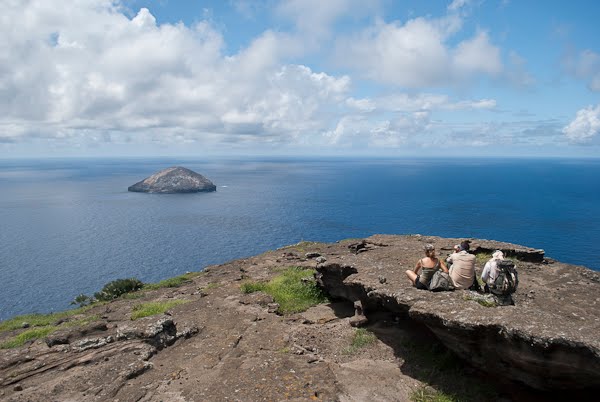
Round Island with Serpent Island in the distance

Round Island Keel Scaled Boa (Casarea dussumieri)

Sunset
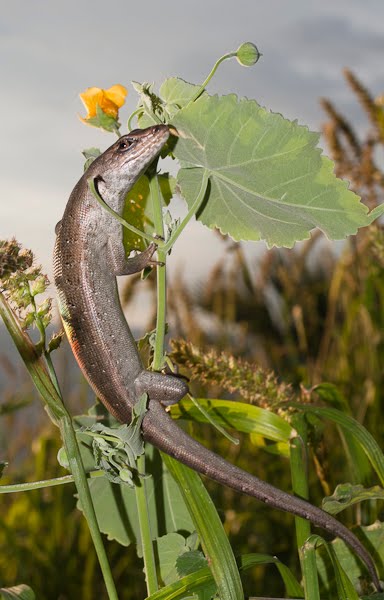
Telfair's Skink (Leiolopisma telfairii)

White-tailed Tropicbird (Phaethon lepturus)

Sunday, January 30, 2011

Mauritius Kestrel (Falco punctatus)


The Mauritius Kestrel is a bird of prey endemic to the forests of Mauritius and was once regarded the rarest bird in the world. In the 1970's there were only 4 known individuals left with one breeding female found only in the Lower Black River Gorges. Now due to intensive conservation and management efforts the population has risen between 800-1000 birds and downgraded from Critically endangered to Endangered in 1994 and then to Vulnerable in 2000 by the IUCN.

They used to range from sea level to the highest upland forests but due to deforestation and degradation for lumber and agricultural purposes in 1900 they were restricted to 3 mountain ranges; Moka, Bambous and Lower Black River Gorges. Later on in the 1950-60's large amounts of DDT was used to control malaria and predation by invasive species (cats, rats, mongooses) reduced the kestrel population even further to only 20-25 and then only 4 in 1974.


Female watching us as we do a nest access

Male with recently caught gecko

Mauritius Kestrel Chick

Mauritius Kestrel Chick

Conservation biologists
(Saoirse Morgan and Paul Tinsley-Marshall) ringing a chick


Conservation biologist (Saoirse Morgan) ringing a chick

Conservation Biologist (Paul Tinsley-Marshall) taking a blood sample for genetic analysis

Conservation Biologist (Edward Winfield) performing morphometrics


Sunday, January 16, 2011

Mascarene Paradise Flycatcher

The Mascarene Paradise Flycatcher
(Terpsiphone bourbonnensis)

With their metallic coloured plumage and charasmatic, curious behaviour they are definitely one of my favourite avian species of Mauritius. Currently I am working at combo, one of the newest field stations occupied by Mauritian Wildlife Foundation Staff in the Black Gorges National Park. Here, there is a great chance to see a wide variety and abundance of species including; Pink Pigeons, Olive White-eyes, Mauritius Bulbuls and Paradise Flycatchers.
This species of Flycatcher is endemic to the islands of Mauritius and Réunion but less common in Mauritius. Their natural habitat is subtropical or tropical moist lowland forests and as there name suggests is particularly partical to insects.


Saturday, November 13, 2010

Skinks

The following pictures are of Dany Vercatasamy performing morphometrics on Telfair's skink (Leiolopisma telfairii).


One way to tell males from females is to look for a pair of hemipenes which looks like two bulges behind the cloaca at the base of the tail.

They need to be looked over to see if there are any scars or features that could be used to identify the skink from others and as you may see a digit is missing from the back right hand foot.

Each is microchipped with a unique number


Then they are numbered so that they not catched frequently but can still be tracked for movement between areas. The ink is toxic so it is made sure that numbers are not written on wounds.


Here Dany is measuring the distance between tail brakes which can be seen from the discolouration

Sunday, November 7, 2010

Famous Whale

Thought that i would mention that this picture has become quite popular with the alamy sales but also in Iceland where it is used for marketing Reykjavik whale watching and it was also used by Icelandic airlines so keep an eye out on the London underground for this picture.